
Tuesday, 8 July 2014

BOX
 BOX
BOX
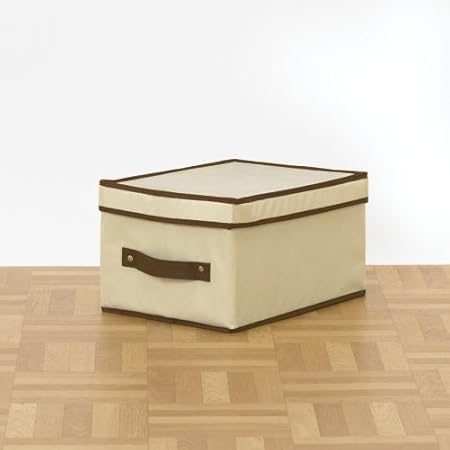
The speaker in the poem is upset, perhaps bitter, but does s/he practice what s/he preaches? Is the speaker equally carrying out a boxing exercise with words or is s/he merely being ironic at the end? If s/he is carrying out a "boxing" exercise, has it been successful? Thanks to Cassie and Chris for picking up on the sparring connotation of the title, perhaps a contest that is still continuing, a battle far from over.

Box
You bought a storage box,
From Amazon UK,
Delivered with due expedition,
It arrived the following day,
And in the same way,
Without delay,
You boxed up the corpse,
Of yesterday, with
The usual debris:
Souvenirs of visits,
Cinema and theatre tickets,
The odd item of wear,
Scribbled notes on beer mats,
With lots and and lots of X kisses,
Photographs and postcards,
English Heritage pens and pencils,
National Trust rulers and stencils,
Stuff from CAMRA outings,
Music gig mementos,
Gathered and grouped without fanfare,
And last and by all means least - me
Dumped unceremoniously.
We “things” found our final home,
Lying in darkness and under a lid for a sky,
Sad and silent,
The long oblong goodbye,
Then you locked us up for good,
For eternity or whatever lasts longer,
And hid away the key like you could,
Hide a memory.
In reality,
You buried me,
To conceal me from the other,
You had taken behind my back,
I’m sure just an innocent case of overlap,
A slight, and easily forgivable mishap,
One of many “lovers” it would seem,
I was trundled and bundled away,
So not to reveal your usual
Modus operandi,
AKA, being ultra sly
Poor guy.
Once the dirty deed was done, you
Heaved your box to the boot of your car,
Hearsed me over to your parents’ home,
Dumped me in the box room there,
For interment until the judgement day,
But the judgement day had come and gone,
I judged you a long time ago and
Boxes cannot hold the soul,
Or contain a life you sought to control,
And bury away:
The spirit roars,
The spirit soars,
This spirit always roars, is free
From any form of captivity.
Throughout your life and your questionable past,
A number of questions I would ask:
Over the years, every day,
How many boxes have you filled,
Similarly, rapidly,
Sociopathically,
How many have you filled then buried away?
How long before he goes the same way,
Measuring him up for his judgement day?
Will you box the mug with the red Hornby train,
The one bought him with the birthday voucher,
I'd given you?
Classy.
Will that be treated just the same as
My love letters and all that they shamefully revealed?
Will all your next relationships be signed off and sealed?
Will that mug be boxed away like this one was?
What is a box but a denial of a past,
And a symbol of a time that could not last,
The people and the objects you may entomb,
But who is really boxing whom?
Don’t bury failure, learn from it instead,
Embrace the life experience to help you move ahead,
Or just keep filling boxes until you're dead
And placed in the final box of all:
Unhinged, unwanted, empty, plain and small.
Closure.
© Stephen Evans, July 2014
Saturday, 5 July 2014
WAITING FOR THE PERFECT WAVE

Above: a picture of my father taken on super-8 movie film in the 1970s. Perhaps this explains the origins of the visual metaphor in the poem? I had the old cine-film recently transferred into digital medium with many old images greeting me that I had not seen since the early 80s. Watching them after all this time evoked a bitter-sweet reaction as you would expect with many people recalled on film who are no more or utterly changed beyond recognition. This also applies to locations and to an extent, a way of life and British culture.
This is from a short-collection of poems called "Waiting for the Perfect Wave."
Tears, idle tears, I know not what they mean,
Tears from the depth of some divine despair
Rise in the heart, and gather to the eyes,

Tears from the depth of some divine despair
Rise in the heart, and gather to the eyes,
In my case, when there is loss I return to a recurring image. It is usually a beach, it is a sunny, blinding day and the person I love is always leaving while I am motionless and unable to move. The beach is generic although there are people there but I do not register them in detail as I am focused on the person leaving. They always walk across the beach towards the sea. They turn and almost bear a look of sad-resignation on their faces that says, that although it is upsetting that we must part, it is also necessary. The world moves on and parting is as important as meeting. Perhaps they wish me to intervene, to rush to them and to stop them from leaving but I am passive bystander unable to change the inevitable, the pre-destined. Throughout this scene almost like a spectator at a cinema who can engage on an emotional level but cannot change the event unfolding before them. There is frustration but also a resignation. The person enters the sea and succumbs to its embrace.
A parting is an end but also a beginning for both people, even I would hope, at times when we lose a person very dear to us through death. However, it does not take away the immediate sense of loss and the terrible grief and guilt that befriends us for such a long time afterwards.
Waiting For the Perfect Wave
This is how it always ends.
Unravelling before me,
A shimmering sea of super 8 hyper-real intensity,
At intervals in symmetry,
Migraine dots and flecks and cracks,
Appear and disappear,
Background to foreground flickers,
Dots and spots splat within a
Perforated frame.
I was told never to take pictures,
Facing the sun,
But that is where I am forced to focus,
Exposed beyond all decency,
I have no choice,
For this thought film recurs in spools,
From time to tide,
The smoothest sand sifts through this scene,
Measuring time like strata sifting,
Through my time-lapsed life,
My focus deep, deep with all regret,
Tears my inner eyelids,
Squints for some perspective,
All is bleary and blurred.
The gulls cry to greet the black rigged sails,
The anguish of the Aegean father breaks,
Stone upon stone this foreign shore,
Over the tide's brittle roar,
A scream that cannot be suppressed,
I've been here before,
To this visual metaphor,
Shades shuffle slowly across the sands,
Out of reach of recognition for,
They are not important,
All that matters,
The shape in the centre,
Slightly out of focus,
At first,
Their blurred back always to me,
Their goal, the unfathomable sea,
And the cold embrace,
And here I sense,
Their life delineated by the foam's silent line,
The border territory of some unspeakable kingdom,
And then they turn,
You turn,
(Half turning stare at me),
A look as distant as the sea,
Rossetti sad or,
An Annabel Lee,
Sometimes you sadly smile then turn away,
To face your predestination,
Returning to the wombs’ black tomb,
Evolution in reverse,
The tide sweeps back and forth.
Sometimes you frown,
Sometimes pensive, like some unbirthed sigh,
Of those that know we are born only to die.
Shoulder high and water deep into the ebb and flow,
That takes you onwards on your course,
Deeper by depths and deeper by distance,
While I rigid stare,
Bystander like, a camera rooted,
Recording through a misting lens,
Partaking in passivity.
Powerless to force your stay,
You wade on further into the blinding light,
The shades oblivious in their play,
Or thoughts,
My eyes follow in your wake,
Until you are no more. Sometimes the sound of
Rolling film, the tail end fin,
Of white screen, the scream of wild-abandoned film,
Ends this final scene.
So went my father,
So went dear friends so deeply loved,
So went old loves deeply more than friends,
All to meet their ends,
On currents I shall never chart or understand,
Waiting for the perfect wave my hand,
And the salt taste rising in my mouth.
(c) Stephen Evans 2014
Monday, 23 June 2014
MARLON BRANDO STANZA FROM WAITING FOR THE PERFECT WAVE
Marlon Brando, so the story goes, spent weeks on a beach waiting to shoot the perfect wave for the one and only film he directed called "One Eyed Jacks". He squandered so much studio money that he did not direct again. Perfectionism or obsession? Perhaps both.
Brando
 |
| One-Eyed Jacks (Photo credit: Wikipedia) |
Brando
A broken Brando cursed to
Stay in an anonymous one eyed Studio Apartment
Delay, decay, I see no blinded Cylopes here,
He no Greek Hero he an Italian
Stallion or so I hear,
Beware no horses head,
May end up in Don Brando's bed.
Telescoped and cinema-scoped and
All at sea.
"Get out!"
Exclaims the big man exhaling old World curses and cigar breath threats.
"You'll never work in this town Again, For so freely taking liberties."
Time,
Who will prevail with interest,
To those who dare waste her providence,
To those who procrastinate behind Locked doors like a dirty
Family secret,
Fifteen minutes of flame like Cronus,
Bloated on your throne of faded Glory,
A fatter cheque for fathering
A superman,
Is in the post.
Is in the post.
Catullus or is it Welles that sends You this telegram, "Brando dear Buddy,
Hail and, Farewell!"
Stephen Evans 2014
Friday, 20 June 2014
Long Distance II
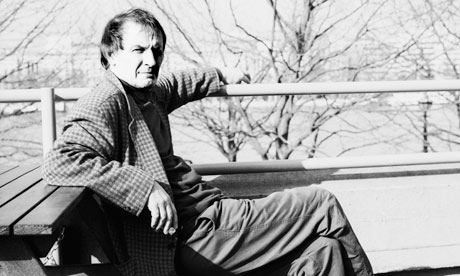
A poem that does to me what "It's a Wonderful Life" does through cinema. like the Rilke poem I included recently, the final two lines guarantees to bring some "tears idle tears" to my eyes "unused to flow".
Yorkshire born Tony Harrison's poem written in the 1960s captures perfectly the constant battle between love and logic. Many people take a rational view that there is no life after death but still would wish there to be something beyond this life, and with it, the reuniting of loved-ones. Literature can grant a form of immortality as Harrison does for his beloved mum and dad, in the same way Ben Jonson's son, who died aged seven, will, through verse, in the poem, "On My First Sonne" live forever.
I think it captures perfectly the nature of people, especially men to share their emotions and the age-old frictions between fathers and their sons.
Long Distance II
Though my mother was already two years dead
Dad kept her slippers warming by the gas,
put hot water bottles her side of the bed
and still went to renew her transport pass.
You couldn't just drop in. You had to phone.
He'd put you off an hour to give him time
to clear away her things and look alone
as though his still raw love were such a crime.
He couldn't risk my blight of disbelief
though sure that very soon he'd hear her key
scrape in the rusted lock and end his grief.
He knew she'd just popped out to get the tea.
I believe life ends with death, and that is all.
You haven't both gone shopping; just the same,
in my new black leather phone book there's your name
and the disconnected number I still call.
Friday, 30 May 2014
I LOVE YOU ALL FROM THE FILM "FRANK"
A great film with one of the best indie-anthems I've heard in ages, "I love you all".
Saturday, 10 May 2014

Monday, 5 May 2014

Wednesday, 30 April 2014
FRIENDSHIP POEM
Subject: FRIENDSHIP POEM , by KHALIL GIBRAN Wed Dec 03, 2008 10:21 pm
FRIENDSHIP POEM , by KHALIL GIBRAN
(1883 /1931)
If I Could...
If I could catch a rainbow
I would do it just for you
And share with you its beauty
On the days you're feeling blue.
If I could build a mountain
You could call your very own
A place to find serenity
A place to be alone.
If I could take your troubles
I would toss them in the sea
But all these things I'm finding
Are impossible for me.
I cannot build a mountain
Or catch a rainbow fair
But let me be what I know best:
A friend who's always there.
FRIENDSHIP POEM , by KHALIL GIBRAN
(1883 /1931)
If I Could...
If I could catch a rainbow
I would do it just for you
And share with you its beauty
On the days you're feeling blue.
If I could build a mountain
You could call your very own
A place to find serenity
A place to be alone.
If I could take your troubles
I would toss them in the sea
But all these things I'm finding
Are impossible for me.
I cannot build a mountain
Or catch a rainbow fair
But let me be what I know best:
A friend who's always there.
Sunday, 27 April 2014
ELIZABETH BARRETT BROWNING
A poem which is a delight in itself but is given added resonance if time is spent reading of the close relationship between poet and poet husband and of how they overcame parental objection to their love by eloping! How brave they must have been to have done so, especially in the 19th Century.

This was a relationship tested to it limits and found to be genuine, profound and resilient. Happily, their love grew even stronger and both found contentment in the company of the other. They were indeed true soul-mates.
How Do I Love Thee?
How do I love thee? Let me count the ways.
I love thee to the depth and breadth and height
My soul can reach, when feeling out of sight
For the ends of Being and ideal Grace.
I love thee to the level of every day's
Most quiet need, by sun and candlelight.
I love thee freely, as men strive for Right;
I love thee purely, as they turn from Praise.
I love with a passion put to use
In my old griefs, and with my childhood's faith.
I love thee with a love I seemed to lose
With my lost saints, -- I love thee with the breath,
Smiles, tears, of all my life! -- and, if God choose,
I shall but love thee better after death.
I love thee to the depth and breadth and height
My soul can reach, when feeling out of sight
For the ends of Being and ideal Grace.
I love thee to the level of every day's
Most quiet need, by sun and candlelight.
I love thee freely, as men strive for Right;
I love thee purely, as they turn from Praise.
I love with a passion put to use
In my old griefs, and with my childhood's faith.
I love thee with a love I seemed to lose
With my lost saints, -- I love thee with the breath,
Smiles, tears, of all my life! -- and, if God choose,
I shall but love thee better after death.
Elizabeth Barrett Browning
Subscribe to:
Posts (Atom)